
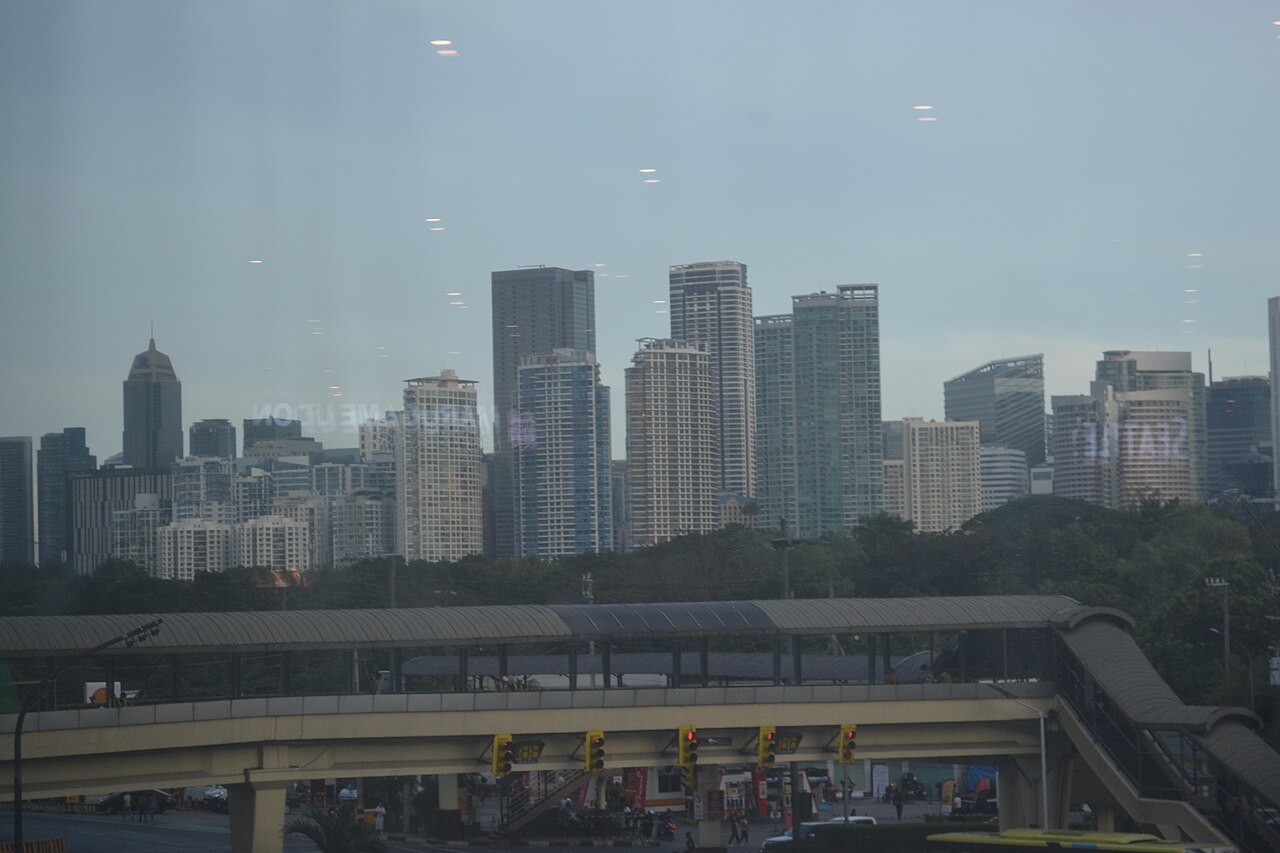

Philippines
Southeast Asia · Manila · PHP (Philippine Peso)
Wirtschafts- und Branchenüberblick
The Philippines is one of Southeast Asia's fastest-growing emerging economies, recording nominal GDP of approximately USD 462 billion in 2024 with real growth of 5.6 to 5.7 percent, the second-highest rate in the region that year. The services sector is the dominant driver of economic output, contributing nearly 63 percent of GDP, with business process outsourcing, finance, and retail trade as major sub-sectors. Remittances from an estimated 10 million overseas Filipino workers constitute a significant and stable source of foreign exchange. The country possesses a large, young, English-proficient workforce and a growing consumer class, which attract both domestic and foreign investment. Key structural challenges include infrastructure gaps, high exposure to natural disasters, fiscal deficits, and restrictions on foreign ownership in certain sectors.
Schlüsselsektoren
Alles über Philippines →Makro
| BIP nominal, USD | $461.67B |
| BIP-Wachstum real, jährlich | 5.6% |
| Inflation jährlich | 3.2% |
| Bevölkerung Menschen | 112.7M |
| BIP pro Kopf USD | $4,080 |
| Marktkapitalisierung gesamt notiert, USD | $232.38B |
| Marktkapitalisierung / BIP | 50.3% |
| Arbeitslosigkeit | 3.8% |
| Börsennotierte Unternehmen | 283 |
| Börse | Philippine Stock Exchange (PSE) |
Datenjahr: 2024. Quellen: Philippine Stock Exchange (pse.com.ph), Bangko Sentral ng Pilipinas (bsp.gov.ph), Philippine Statistics Authority (psa.gov.ph), World Bank, International Monetary Fund (IMF), Worldometer GDP Data, MSCI Index Factsheets (msci.com), Swiss Economic Report on the Philippines 2024 (eda.admin.ch), ASEAN Macroeconomic Research Office (AMRO) Country Report 2024, FocusEconomics Philippines, dividends.ph Top 100 PSE Companies 2026, companiesmarketcap.com Philippines, iShares / BlackRock EPHE ETF page, Philippine Retirement Authority (PRA), Board of Investments Philippines (BOI). Individual figures may cover different reference periods — for example a fiscal year, or an estimate for the current year — and the overview above states these where known.
Aktuelle Nachrichten
Links open the publisher's website in a new tab.
Weitere Southeast Asia-Märkte
 Indonesia
 Thailand
 Malaysia
 Vietnam
Größte börsennotierte Unternehmen
Die größten Unternehmen an der wichtigsten lokalen Börse, nach Marktkapitalisierung.
| # | Unternehmen | Sektor | MarktkapitalisierungUSD | US-Notierung |
|---|---|---|---|---|
| 1 | SM Investments CorporationSM · PSE | Diversified Conglomerates / Retail | $20.01B | — |
| 2 | SM Prime Holdings, Inc.SMPH · PSE | Real Estate / Property Development | $13.50B | — |
| 3 | BDO Unibank, Inc.BDO · PSE | Banking / Financial Services | $11.32B | — |
| 4 | Ayala CorporationAC · PSE | Diversified Conglomerates | $8.96B | — |
| 5 | Ayala Land, Inc.ALI · PSE | Real Estate / Property Development | $7.80B | — |
| 6 | Bank of the Philippine Islands (BPI)BPI · PSE | Banking / Financial Services | $7.20B | — |
| 7 | PLDT Inc.TEL · PSE | Telecommunications | $5.90B | PHI |
| 8 | Metropolitan Bank & Trust Company (Metrobank)MBT · PSE | Banking / Financial Services | $4.76B | — |
| 9 | San Miguel CorporationSMC · PSE | Food, Beverage, and Infrastructure | $4.50B | — |
| 10 | Jollibee Foods CorporationJFC · PSE | Consumer / Quick Service Restaurants | $4.20B | — |
| 11 | Globe Telecom, Inc.GLO · PSE | Telecommunications | $4.10B | — |
| 12 | Manila Electric Company (Meralco)MER · PSE | Energy / Utilities (Power Distribution) | $3.80B | — |
| 13 | GT Capital Holdings, Inc.GTCAP · PSE | Diversified Conglomerates | $2.40B | — |
| 14 | Aboitiz Equity Ventures, Inc.AEV · PSE | Diversified Conglomerates / Energy | $2.30B | — |
| 15 | Aboitiz Power CorporationAP · PSE | Energy / Utilities | $2.15B | — |
| 16 | Union Bank of the Philippines (UnionBank)UBP · PSE | Banking / Financial Services | $1.90B | — |
| 17 | Metro Pacific Investments Corporation (MPIC)MPI · PSE | Industrials / Infrastructure | $1.85B | — |
| 18 | Robinsons Land CorporationRLC · PSE | Real Estate / Property Development | $1.75B | — |
| 19 | JG Summit Holdings, Inc.JGS · PSE | Diversified Conglomerates | $1.70B | — |
| 20 | Megaworld CorporationMEG · PSE | Real Estate / Property Development | $1.60B | — |
| 21 | Alliance Global Group, Inc.AGI · PSE | Diversified Conglomerates | $1.55B | — |
| 22 | Security Bank CorporationSECB · PSE | Banking / Financial Services | $1.50B | — |
| 23 | International Container Terminal Services, Inc. (ICTSI)ICT · PSE | Industrials / Port Operations | $1.45B | — |
| 24 | First Philippine Holdings CorporationFPH · PSE | Energy / Diversified | $1.40B | — |
| 25 | ACEN CorporationACEN · PSE | Energy / Renewable Energy | $1.30B | — |
| 26 | Robinsons Retail Holdings, Inc.RRHI · PSE | Consumer / Retail | $1.20B | — |
| 27 | Semirara Mining and Power CorporationSCC · PSE | Mining / Energy | $1.10B | — |
| 28 | Monde Nissin CorporationMONDE · PSE | Consumer / Food and Beverage | $1.05B | — |
| 29 | Rizal Commercial Banking Corporation (RCBC)RCB · PSE | Banking / Financial Services | $980.00M | — |
| 30 | Filinvest Land, Inc.FLI · PSE | Real Estate / Property Development | $900.00M | — |
In den USA gehandelte ETFs
In den USA notierte Fonds, die Zugang zu diesem Markt bieten – der einfachste Weg für viele US-Anleger.
| ETF | Anlagebereich | Kostenkennziffer% jährlich | Exposition% des Fonds |
|---|---|---|---|
| EPHEiShares MSCI Philippines ETF · BlackRock (iShares) | Einzelnes Land | 0.59% | 100% |
| VWOVanguard FTSE Emerging Markets ETF · Vanguard | Breite Schwellenländer | 0.08% | 1% |
| EEMAiShares MSCI Emerging Markets Asia ETF · BlackRock (iShares) | Regional | 0.14% | 2% |
| ASEAGlobal X - FTSE Southeast Asia ETF · Global X | Regional | 0.65% | 8% |
| EEMiShares MSCI Emerging Markets ETF · BlackRock (iShares) | Breite Schwellenländer | 0.70% | 1% |
Lokale Börse & Zugang
| Börse | Philippine Stock Exchange |
| Kürzel | PSE |
| Website | www.pse.com.ph |
| Währung | PHP |
Lokaler Brokerzugang
Foreign investors can access Philippine-listed equities through local PSE-accredited brokers such as COL Financial, BDO Nomura Securities, and First Metro Securities, many of which offer online trading platforms. International retail investors without a Philippine brokerage account typically gain exposure through US-listed ETFs such as EPHE (iShares MSCI Philippines ETF) or through over-the-counter purchase of Philippine depositary receipts and OTC-quoted shares. Foreign ownership limits apply in certain sectors such as telecommunications, media, retail, and public utilities, which may restrict direct shareholding. A stock transaction tax of 0.6 percent applies to seller proceeds on the PSE.
Globale Broker mit Zugang zu ausländischen Märkten
- Interactive Brokers — Direct access to 90+ markets worldwide, including many emerging exchanges.
- Saxo Bank — Multi-market access across Asia, Europe and the Middle East.
- Charles Schwab (Global) — Foreign ordinary shares on select markets; US-listed ADRs and ETFs.
- Fidelity International Trading — International stock trading on a number of developed and emerging markets.
Nur zur Orientierung aufgeführt – keine Empfehlung. Verfügbare Märkte, Gebühren und Anmeldebedingungen variieren je nach Broker und Wohnsitzland.
Umzug & Aufenthalt
Investment-Visa / Residenzprogramm
Förderprogramme Permanent residency (non-expiring, does not lead to citizenship)
The Philippines offers two primary investment-linked residency pathways. The Special Investor's Resident Visa (SIRV), administered by the Board of Investments, grants indefinite stay and multiple-entry privileges to non-Filipino nationals who invest a minimum of USD 75,000 in eligible vehicles such as publicly listed Philippine Stock Exchange shares or approved business enterprises. The Special Resident Retiree's Visa (SRRV), administered by the Philippine Retirement Authority, is available to foreign nationals generally aged 35 and above and requires a time deposit in a Philippine bank, ranging from approximately USD 20,000 for applicants aged 50 or older with a qualifying pension to USD 50,000 for younger or non-pensioned applicants. A newer program, the FAB Investor Visa (FIV), launched in 2024, also requires a minimum investment of USD 75,000 and includes the investor's spouse and children under 21 at no additional investment cost. None of these programs lead directly to citizenship.
Mindestanlage: $20.00K
Benötigen Sie Unterstützung bei der Antragstellung? Spezialisierte Investment-Migrations-Berater wie Henley & Partners.
Zugang für ausländische Investoren
The Philippines is a relatively accessible destination for foreign residents. English is widely spoken and is an official language, lowering the linguistic barrier for expatriates from many countries. The cost of living is moderate by regional standards, with Metro Manila offering urban amenities alongside lower housing costs than Singapore or Hong Kong. Foreign nationals generally cannot own land freehold but may own condominium units up to 40 percent of a building's total floor area. The country experiences typhoons, earthquakes, and volcanic activity, and infrastructure outside major urban centers can be limited. Healthcare quality varies considerably between Metro Manila and provincial areas.
In den USA notierte ADRs & Kreuznotierungen
Unternehmen aus diesem Land, deren Aktien auch in den USA gehandelt werden – investierbar über ein normales US-Brokerkonto.
| Unternehmen | US-Ticker | Lokaler Ticker | Hinweis |
|---|---|---|---|
| Ayala Corporation | AYALY | AC | Ayala Corporation has an OTC-traded ADR in the United States under the ticker AYALY. As one of the Philippines' oldest and most diversified conglomerates, it provides indirect exposure to real estate (Ayala Land), banking (BPI), and telecommunications (Globe Telecom). OTC liquidity is limited. |
| BDO Unibank, Inc. | BDOUY | BDO | BDO Unibank trades over the counter in the United States under the ticker BDOUY as a sponsored OTC ADR. It is the largest bank in the Philippines by assets and is a subsidiary of SM Investments Corporation. OTC ADRs provide US retail investor access but with lower liquidity than exchange-listed instruments. |
| Jollibee Foods Corporation | JBFCF | JFC | Jollibee Foods Corporation has an OTC-traded instrument in the United States under the ticker JBFCF. As the Philippines' largest fast-food chain and a global restaurant group with operations across North America, Europe, and Asia-Pacific, it represents one of the Philippines' most internationally recognizable consumer brands. OTC liquidity is moderate. |
| Metropolitan Bank and Trust Company | MTPOY | MBT | Metrobank trades OTC in the United States under the ticker MTPOY. It is one of the Philippines' largest universal banks and is controlled by the Ty family. The OTC ADR provides US-based access to Philippine banking sector exposure, though volumes are typically low. |
| PLDT Inc. | PHI | TEL | PLDT is listed on the New York Stock Exchange as a Level II ADR under the ticker PHI, making it one of the few Philippine companies with a formal US exchange listing. Each ADR represents one Philippine Depositary Receipt, which in turn represents a beneficial interest in one common share. PLDT is the Philippines' dominant fixed-line and broadband operator through its subsidiary Smart Communications. |
| SM Investments Corporation | SVTMF | SM | SM Investments trades over the counter in the United States under the ticker SVTMF. As the parent holding company of BDO Unibank and SM Prime Holdings, it provides indirect exposure to Philippine banking, retail, and property sectors. OTC liquidity is limited compared to the PSE primary listing. |