
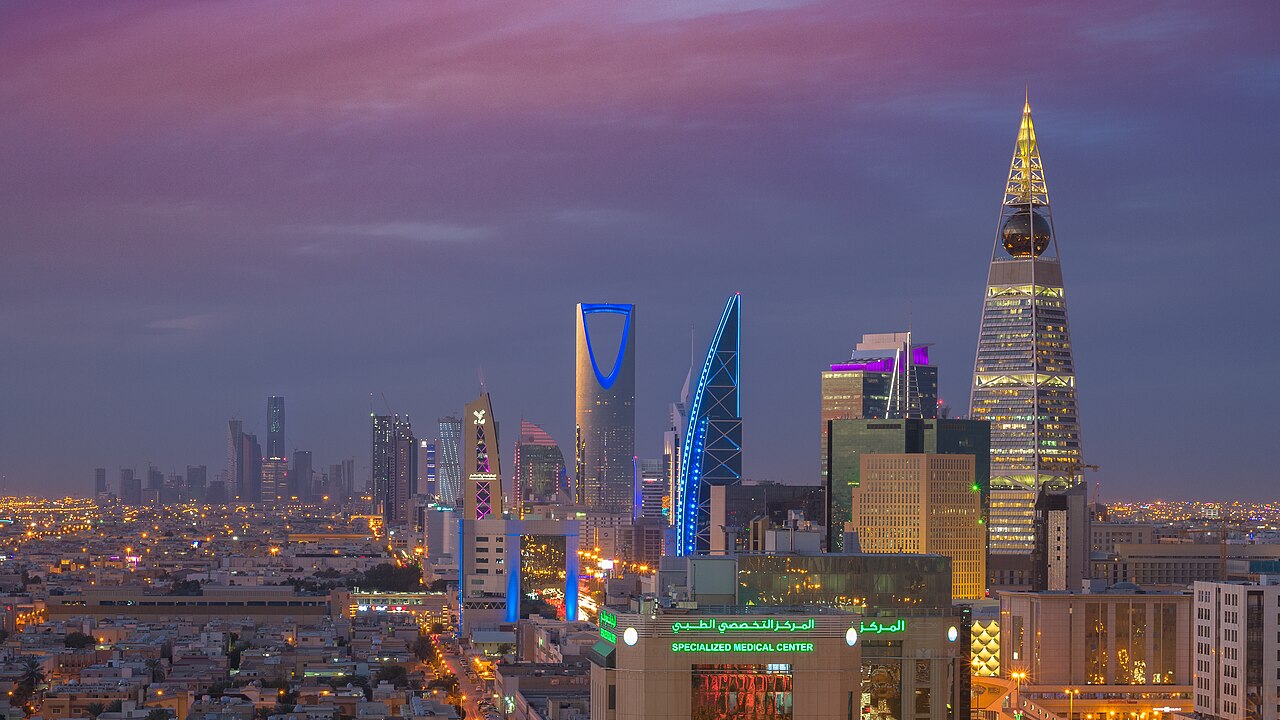

Saudi Arabia
Middle East · Riyadh · SAR (Saudi Riyal)
Economy & industry overview
Saudi Arabia is the world's largest oil exporter and home to Saudi Aramco, the most profitable publicly listed corporation globally; hydrocarbons account for roughly 70% of government revenues and nearly half of GDP. The Kingdom is executing Vision 2030, an ambitious diversification programme targeting tourism, entertainment, logistics, mining, and technology to reduce oil dependency. The financial sector is large and sophisticated, with a well-developed Islamic banking market anchored by Al Rajhi Bank, the world's largest Islamic bank by market capitalisation. The Saudi Exchange (Tadawul) is the Arab world's dominant equity market, with a total market capitalisation of approximately USD 2.72 trillion at end-2024. The non-oil private sector has been the primary driver of recent growth, expanding meaningfully in 2024 even as overall real GDP growth was modest at 1.3%.
Key sectors
Learn everything about Saudi Arabia →Macro
| GDP nominal, USD | $1.11T |
| GDP growth real, annual | 1.3% |
| Inflation annual | 1.6% |
| Population people | 33.7M |
| GDP per capita USD | $35,230 |
| Market cap total listed, USD | $2.72T |
| Market cap / GDP | 245.0% |
| Unemployment | 3.5% |
| Listed companies | 247 |
| Exchange | Saudi Exchange (Tadawul) (TADAWUL) |
Data year: 2024. Sources: IMF World Economic Outlook 2025, World Bank Open Data, General Authority for Statistics Saudi Arabia (GASTAT), Saudi Exchange (Tadawul) Annual Statistical Report 2024, S&P Global / Arab News market cap analysis 2025, Trading Economics, Macrotrends, Statista, Wikipedia – Economy of Saudi Arabia, Wikipedia – Saudi Exchange.
Latest news
Links open the publisher's website in a new tab.
Other Middle East markets
 United Arab Emirates
 Qatar
Qatar Kuwait
 Oman
Oman Jordan
 Bahrain
Largest listed companies
The biggest companies on the main local exchange, by market capitalisation.
| # | Company | Sector | Market capUSD | US listing |
|---|---|---|---|---|
| 1 | Saudi Aramco2222 · TADAWUL | Oil & Gas | $1.68T | — |
| 2 | Al Rajhi Bank1120 · TADAWUL | Banking – Islamic | $106.00B | — |
| 3 | Saudi National Bank (SNB)1180 · TADAWUL | Banking | $55.00B | — |
| 4 | Saudi Basic Industries Corporation (SABIC)2010 · TADAWUL | Petrochemicals & Materials | $50.00B | — |
| 5 | Saudi Telecom Company (STC)7010 · TADAWUL | Telecommunications | $48.00B | — |
| 6 | Saudi Electricity Company (SEC)5110 · TADAWUL | Utilities | $19.00B | — |
| 7 | Riyad Bank1010 · TADAWUL | Banking | $20.00B | — |
| 8 | Saudi British Bank (SABB)1060 · TADAWUL | Banking | $14.50B | — |
| 9 | Banque Saudi Fransi1050 · TADAWUL | Banking | $12.00B | — |
| 10 | Alinma Bank1150 · TADAWUL | Banking – Islamic | $13.50B | — |
| 11 | Arab National Bank (ANB)1080 · TADAWUL | Banking | $9.50B | — |
| 12 | Ma'aden (Saudi Arabian Mining Company)1211 · TADAWUL | Mining & Metals | $15.00B | — |
| 13 | Almarai Company2280 · TADAWUL | Food & Beverage | $14.00B | — |
| 14 | Saudi Tadawul Group Holding1111 · TADAWUL | Financial Services – Exchange | $5.86B | — |
| 15 | Saudi Kayan Petrochemical Company2350 · TADAWUL | Petrochemicals | $5.50B | — |
| 16 | Saudi Ceramic Company2040 · TADAWUL | Building Materials | $1.20B | — |
| 17 | Yanbu National Petrochemical Company (YANSAB)2290 · TADAWUL | Petrochemicals | $6.20B | — |
| 18 | Saudi Arabian Fertilizers Company (SAFCO)2020 · TADAWUL | Chemicals – Fertilisers | $7.80B | — |
| 19 | Etihad Etisalat (Mobily)7020 · TADAWUL | Telecommunications | $8.50B | — |
| 20 | Zain Saudi Arabia7030 · TADAWUL | Telecommunications | $4.50B | — |
| 21 | Kingdom Holding Company4280 · TADAWUL | Diversified Holding | $9.00B | — |
| 22 | Jarir Marketing Company4190 · TADAWUL | Retail | $5.80B | — |
| 23 | Saudi Ground Services (SGS)1808 · TADAWUL | Aviation Services | $2.20B | — |
| 24 | Saudi Arabian Cooperative Insurance Company (SAICO)8010 · TADAWUL | Insurance | $900.00M | — |
| 25 | Dr. Sulaiman Al-Habib Medical Group4013 · TADAWUL | Healthcare | $16.00B | — |
US-traded ETFs
Funds listed in the US that give exposure to this market, the simplest route for many US investors.
| ETF | Scope | Expense ratioannual % | Exposure% of fund |
|---|---|---|---|
| KSAiShares MSCI Saudi Arabia ETF · BlackRock (iShares) | Single-country | 0.74% | 100% |
| KSAiShares MSCI Saudi Arabia ETF · BlackRock (iShares) | Single-country | 0.74% | 100% |
| FMiShares MSCI Frontier and Select EM ETF · BlackRock (iShares) | Broad EM | 0.79% | 15% |
| EMQQEMQQ The Emerging Markets Internet ETF · EMQQ Global | Broad EM | 0.86% | 3% |
| GULFWisdomTree Middle East Dividend Fund · WisdomTree | Regional | 0.88% | 30% |
Local exchange & access
| Exchange | Saudi Exchange (Tadawul) |
| Code | TADAWUL |
| Website | www.saudiexchange.sa |
| Currency | SAR |
Local broker access
Direct retail access to the Saudi Exchange (Tadawul) by non-resident foreigners remains restricted. Foreign Qualified Financial Institutions (QFIs) meeting CMA Saudi Arabia eligibility criteria may invest directly. Most international retail investors gain exposure via US-listed ETFs, particularly KSA (iShares MSCI Saudi Arabia ETF) and regional EM ETFs. A small number of international brokerage platforms offer direct Tadawul access to eligible non-Saudi retail investors through local sub-custodian arrangements. Local brokers operating on Tadawul include Al Rajhi Capital, SNB Capital, Albilad Investment, and HSBC Saudi Arabia, among others regulated by the Capital Market Authority (CMA).
Global brokers with foreign-market access
- Interactive Brokers — Direct access to 90+ markets worldwide, including many emerging exchanges.
- Saxo Bank — Multi-market access across Asia, Europe and the Middle East.
- Charles Schwab (Global) — Foreign ordinary shares on select markets; US-listed ADRs and ETFs.
- Fidelity International Trading — International stock trading on a number of developed and emerging markets.
Listed for convenience only. Not a recommendation. Available markets, fees and onboarding rules differ by broker and by your country of residence.
Relocation & residency
Investment visa / residency programme
Grants Permanent or temporary long-term residency (not citizenship)
Saudi Arabia operates a 'Premium Residency' (Iqama Mumayaza) programme launched in 2019. It offers long-term residency to qualifying foreign nationals. One pathway is a one-time fee of SAR 800,000 (approximately USD 213,000) for permanent premium residency. A second pathway is an annual fee of SAR 100,000 (approximately USD 26,700) per year for temporary premium residency. Eligibility requires a clean criminal record, valid passport, and health insurance. Premium residents may own residential property, conduct business, and sponsor family members without requiring a Saudi employer sponsor. The programme does not confer citizenship or a Saudi passport.
Minimum investment: $213.00K
Need help applying? Specialist investment-migration advisers such as Henley & Partners.
Foreign-investor access
Saudi Arabia has significantly reformed its expatriate residency system. The Premium Residency programme allows qualifying individuals to live, work, and own property without employer sponsorship. The Kingdom has relaxed entertainment, social, and business regulations substantially since 2017 under Vision 2030 reforms. Income tax is not levied on individuals. A VAT of 15% applies to most goods and services. Cost of living in Riyadh and Jeddah has risen but remains lower than comparable Gulf hub cities. Arabic is the official language; English is widely used in business.
US-listed ADRs & cross-listings
Companies from this country whose shares also trade in the US, investable in a normal US brokerage account.
| Company | US ticker | Local ticker | Note |
|---|---|---|---|
| Al Rajhi Bank | 1120 | Al Rajhi Bank has no US ADR listing; accessible to foreign qualified investors through Tadawul QFI channels or via ETF products. | |
| Saudi Aramco | ARMCO | 2222 | Saudi Aramco has OTC pink-sheet trading in the US under informal ADR arrangements but does not have a formal sponsored ADR programme or a primary US listing as of 2024. International investors primarily access Aramco via its Tadawul listing or via KSA ETF. |
| Saudi Telecom Company (STC) | 7010 | STC does not maintain a formal US ADR programme; US investors gain indirect exposure through single-country or regional ETFs. |