
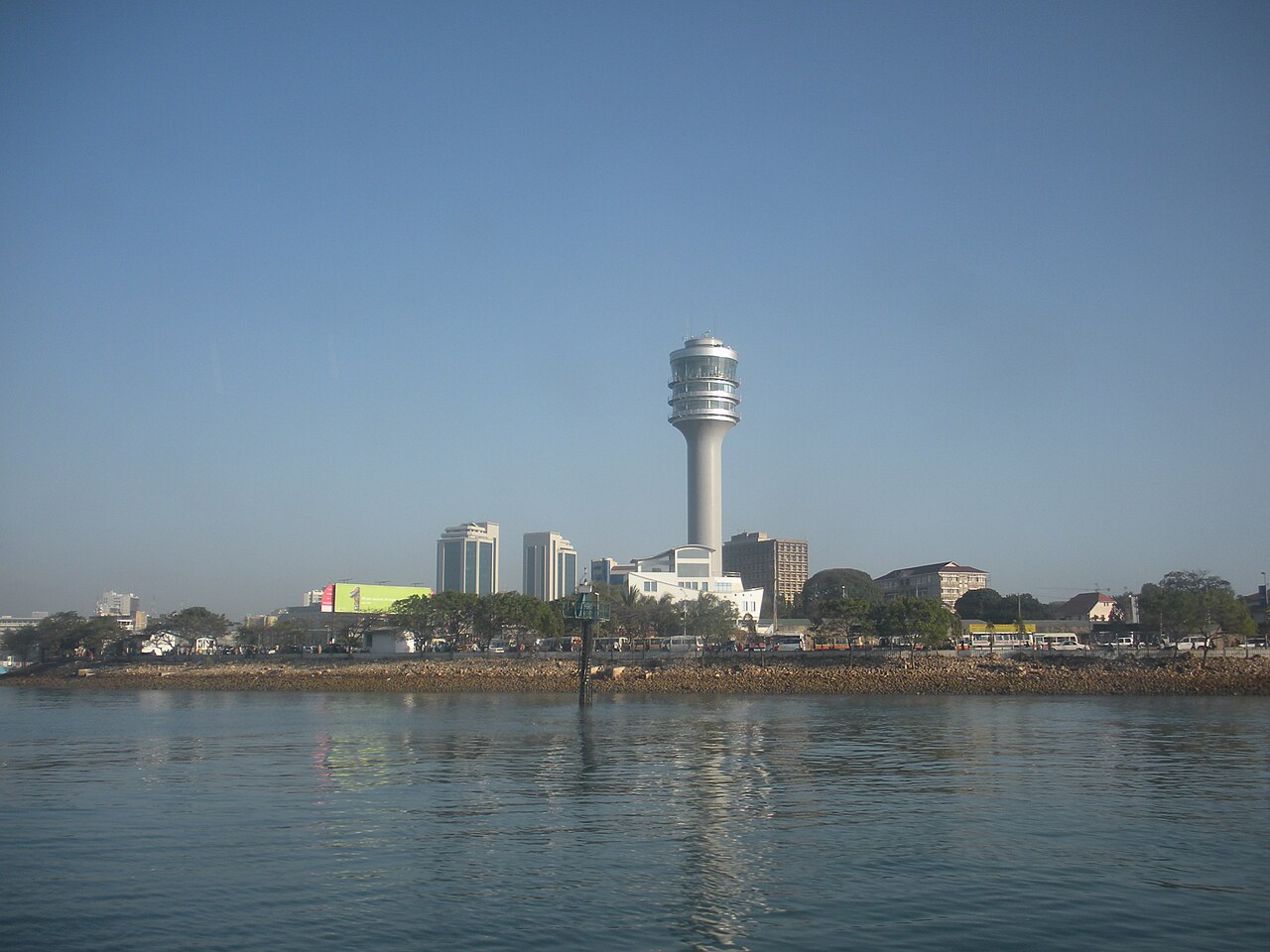

Tanzania Frontier
Africa · Dodoma · TZS (Tanzanian Shilling)
Economy & industry overview
Tanzania is East Africa's second-largest economy, with nominal GDP of approximately 79 billion USD in 2024 and consistent real growth averaging around 5 to 6 percent annually, driven by agriculture, mining, construction, tourism, and financial services. The country is a significant gold producer and hosts major natural gas reserves, while its agricultural sector, producing coffee, tea, cotton, and cashews, employs the majority of the workforce. The financial services sector has expanded rapidly, with commercial banks such as CRDB Bank and NMB Bank becoming anchor institutions on the Dar es Salaam Stock Exchange. Tanzania's inflation has remained moderate, staying near 3 percent in 2024 and 2025, well within the Bank of Tanzania's target range. The economy faces structural challenges including a very large informal sector, low GDP per capita, and limited capital market depth relative to regional peers.
Key sectors
Learn everything about Tanzania →Macro
| GDP nominal, USD | $79.24B |
| GDP growth real, annual | 6.0% |
| Inflation annual | 3.3% |
| Population people | 68.6M |
| GDP per capita USD | $1,156 |
| Market cap total listed, USD | $9.78B |
| Market cap / GDP | 10.8% |
| Unemployment | 2.6% |
| Listed companies | 28 |
| Exchange | Dar es Salaam Stock Exchange (DSE) |
Primary data year: 2025. Sources: TanzaniaInvest, World Bank, African Development Bank African Economic Outlook 2026, IMF World Economic Outlook, Bank of Tanzania, DataStats, GlobalEconomy, DSE Official Website (dse.co.tz), Central Securities Depository and Registry (CSDR Tanzania), StockAnalysis, MarketScreener, Wikipedia Economy of Tanzania. Individual figures may cover different reference periods — for example a fiscal year, or an estimate for the current year — and the overview above states these where known.
Latest news
Links open the publisher's website in a new tab.
 South Africa
 Morocco
 Nigeria
 Côte d'Ivoire
 Kenya
 Mauritius
 Tunisia
 Ghana
 Botswana
 Burkina Faso
 Senegal
 Mali
 Niger
 Benin
 Togo
 Guinea-Bissau
Largest listed companies
The biggest companies on the main local exchange, by market capitalisation. Where a foreign company holds a secondary listing here, it is shown after the domestic companies.
| # | Company | Sector | Market capUSD | US listing |
|---|---|---|---|---|
| 1 | NMB Bank PlcNMB · DSE | Finance · Banking | $3.18B | — |
| 2 | CRDB Bank PlcCRDB · DSE | Finance · Banking | $2.88B | — |
| 3 | KCB Group PlcKCB · DSE | Finance · Banking | $2.40B | — |
| 4 | Tanzania Breweries LimitedTBL · DSE | Consumer Goods · Beverages | $1.12B | — |
| 5 | Vodacom Tanzania PlcVODA · DSE | Telecommunications | $1.11B | — |
| 6 | Tanzania Cigarette Company LimitedTCC · DSE | Consumer Goods · Tobacco | $526.00M | — |
| 7 | Tanzania Portland Cement Company LimitedTPCC · DSE | Manufacturing · Cement | $405.00M | — |
| 8 | Kenya Airways PlcKA · DSE | Transport · Aviation | $257.00M | — |
| 9 | Jubilee Holdings LimitedJHL · DSE | Finance · Insurance | $230.00M | — |
| 10 | Tanga Cement Company LimitedTCCL · DSE | Manufacturing · Cement | $97.00M | — |
| 11 | National Insurance Corporation of TanzaniaNICO · DSE | Finance · Insurance | $90.00M | — |
| 12 | Dar es Salaam Stock Exchange PlcDSE · DSE | Finance · Exchange Operations | $57.00M | — |
| 13 | Afriprise Investment PlcAFRIPRISE · DSE | Finance · Investment Management | $42.00M | — |
| 14 | TOL Gases LimitedTOL · DSE | Industrials · Industrial Gases | $40.00M | — |
| 15 | Swissport Tanzania PlcSWIS · DSE | Transport · Airport Services | $37.00M | — |
| 16 | Mkombozi Commercial Bank PlcMKCB · DSE | Finance · Banking | $34.00M | — |
| 17 | DCB Commercial Bank PlcDCB · DSE | Finance · Banking | $33.00M | — |
| 18 | Maendeleo Bank PlcMBP · DSE | Finance · Banking | $25.00M | — |
| 19 | MUCOBA Bank PlcMUCOBA · DSE | Finance · Banking | $6.60M | — |
| 20 | Yetu Microfinance Bank PlcYETU · DSE | Finance · Microfinance | $2.79M | — |
| 21 | Mwalimu Commercial Bank PlcMCB · DSE | Finance · Banking | — | — |
| 22 | Swala Oil and Gas Tanzania PlcSWALA · DSE | Energy · Oil and Gas Exploration | — | — |
| 23 | JATU PlcJATU · DSE | Agriculture · Agro-processing | — | — |
| 24 | TATEPA Company LimitedTTP · DSE | Agriculture · Tea | — | — |
| 25 | Uchumi Supermarkets LimitedUSL · DSE | Consumer Services · Retail | — | — |
| 26 | Nation Media Group PlcNMG · DSE | Media · Publishing and Broadcasting | — | — |
| 27 | Precision Air Services PlcPAL · DSE | Transport · Aviation | — | — |
| 28 | East African Breweries LimitedEABL · DSE | Consumer Goods · Beverages | — | — |
US-traded ETFs
Funds listed in the US that give exposure to this market, the simplest route for many US investors.
Local exchange & access
| Exchange | Dar es Salaam Stock Exchange |
| Code | DSE |
| Website | www.dse.co.tz |
| Currency | TZS |
Local broker access
Direct access to the Dar es Salaam Stock Exchange for non-resident retail investors is limited. Trading is conducted through licensed DSE dealing members (local brokers and investment banks). International investors typically access DSE-listed securities through a local custodian or a regional broker with a DSE dealing licence. There are no US-listed single-country Tanzania ETFs or depositary receipts for DSE-listed domestic companies as of 2025. Broad Africa-focused or frontier-market ETFs may carry indirect exposure to Tanzania through cross-listed regional names.
Global brokers with foreign-market access
- Interactive Brokers — Direct access to 90+ markets worldwide, including many emerging exchanges.
- Saxo Bank — Multi-market access across Asia, Europe and the Middle East.
- Charles Schwab (Global) — Foreign ordinary shares on select markets; US-listed ADRs and ETFs.
- Fidelity International Trading — International stock trading on a number of developed and emerging markets.
Listed for convenience only. Not a recommendation. Available markets, fees and onboarding rules differ by broker and by your country of residence.
Relocation & residency
Investment visa / residency programme
Grants No formal investment-migration programme
Tanzania does not operate a formal residency-by-investment or citizenship-by-investment programme. Foreign nationals may apply for residence permits under standard immigration categories, including investor permits, through the Tanzania Immigration Services Department, but no dedicated investment-migration pathway granting automatic residency or citizenship in exchange for a defined capital threshold exists.
Need help applying? Specialist investment-migration advisers such as Henley & Partners.
Foreign-investor access
Foreign nationals wishing to reside in Tanzania typically apply for a Class C Residence Permit (for investors and self-employed persons) or other standard immigration categories. Investors are generally required to demonstrate a minimum capital investment and register with the Tanzania Investment Centre. The country uses a single-visa East African Tourist Visa shared with Kenya and Uganda for short stays. Long-term residency is not automatically conferred by investment and must be renewed periodically.